
The most dangerous DeFi transaction is not always the one that moves the most money. Sometimes it is the small approval that quietly gives a smart contract permission to spend an entire token balance later. That is the counterintuitive point: the visible swap may be only one step in the risk, while the approval creates a continuing authority. Transaction simulation and token approval management address different parts of this problem. Simulation asks, “What is this transaction likely to do?” Approval management asks, “What permissions will remain after it succeeds?” For US users navigating multiple chains, decentralized exchanges, lending markets, and unfamiliar applications, understanding the distinction is more valuable than relying on any wallet interface as a substitute for judgment.
A browser wallet is an interpreter between a user and a smart contract. It displays a request, estimates network fees, and asks the user to authorize a cryptographic signature. But a signature does not make a transaction safe by itself. The contract code, the token standard, the current blockchain state, and the website’s intended behavior all matter. A careful workflow therefore combines three checks: inspect the request, simulate its likely result, and review the permissions that survive afterward.
What transaction simulation can—and cannot—tell you
Transaction simulation runs a proposed transaction against a representation of the current blockchain state before the transaction is broadcast. In practical terms, it can help reveal whether a swap appears likely to succeed, which assets may leave or enter the wallet, whether a contract call is expected to revert, and whether the request contains an unusual action. This is a major improvement over signing a dense data payload and hoping the website behaves as expected.
Yet simulation is a preview, not a guarantee. The blockchain may change between the simulation and the mined transaction. A token price can move, liquidity can disappear, a contract can depend on block timing, or a malicious site can present a different request after the user approves an earlier step. Some contract behavior is difficult to interpret, especially when contracts interact across protocols. The useful mental model is not “simulation proves safety,” but “simulation reduces avoidable uncertainty.”
This distinction matters because a successful transaction can still produce a poor outcome. A swap may execute exactly as requested while delivering an unexpectedly small amount because of slippage or a thin liquidity pool. A transaction may also succeed while creating an allowance for a spender that the user did not intend to trust. Simulation is strongest when it converts opaque calldata into understandable consequences; it is weaker when the user has not examined the economic terms, the application domain, or the authority being granted.
Three approaches to token approvals
Unlimited approvals: fewer prompts, broader exposure
Many DeFi applications request an allowance larger than the amount needed for one transaction. The attraction is convenience: a user can interact with the same application repeatedly without approving every deposit, swap, or repayment. The cost is persistence. If the approved contract is later exploited, upgraded in an unexpected way, or tricked into acting through a compromised interface, the allowance may provide a route to spend more tokens than the user intended for the original action.
Unlimited approval is not automatically malicious, and it can reduce repeated gas payments on networks where fees are meaningful. It is a convenience-risk trade-off. It may fit a frequently used, well-understood protocol and a wallet containing only the amount allocated to that strategy. It is a poor fit for a first-time interaction, a high-value wallet, or an application whose contract ownership and upgrade model the user has not examined.
Exact or limited approvals: narrower authority, more friction
An exact approval authorizes a spender to use only the amount required for the immediate action. A limited approval can also set a practical ceiling for repeated use. This approach reduces the size of the possible loss if the permission is abused, but it is not free protection. It may require another approval later, adding a transaction, another fee, and another opportunity to misunderstand a prompt. A user who treats a small approval as proof that the application itself is trustworthy is still missing the larger issue: the contract could misuse even a limited amount.
The best use of limited approvals is as damage containment. Think of an allowance as a spending limit on a payment card, not as a security rating for the merchant. The lower limit narrows exposure; it does not certify the merchant’s identity or code. Before approving, verify the network, token, spender, amount, and application domain. A familiar logo is not sufficient evidence.
Revocation tools: cleaning up old authority
Revocation removes or reduces an existing allowance after the original interaction. This is especially useful for dormant applications, one-time mints, abandoned strategies, and protocols the user no longer recognizes. It can also reveal a common misconception: deleting a wallet extension, clearing browser history, or disconnecting a website does not necessarily remove an on-chain approval. The permission lives in the token contract’s recorded state, not merely in the browser session.
Revocation has its own trade-offs. It normally requires a blockchain transaction and therefore a network fee. Revoking one approval may not address approvals on another chain or for another token. Some asset designs and contract patterns also make approval behavior more complicated than a simple “on” or “off” switch. For that reason, approval review is best treated as periodic maintenance rather than a panic response after every transaction.
Where a Rabby installation fits in the workflow
For a DeFi user installing a browser wallet in the US, the download step is part of the security model, not an administrative detail. Use the project’s official distribution path, verify the browser’s extension publisher, and be suspicious of search advertisements, unsolicited support messages, and pages requesting a recovery phrase. A genuine wallet will not need the secret recovery phrase to “unlock” a new installation through a random support form. Readers seeking a starting point for the rabby wallet extension should still verify the domain and browser prompt before entering any sensitive information.
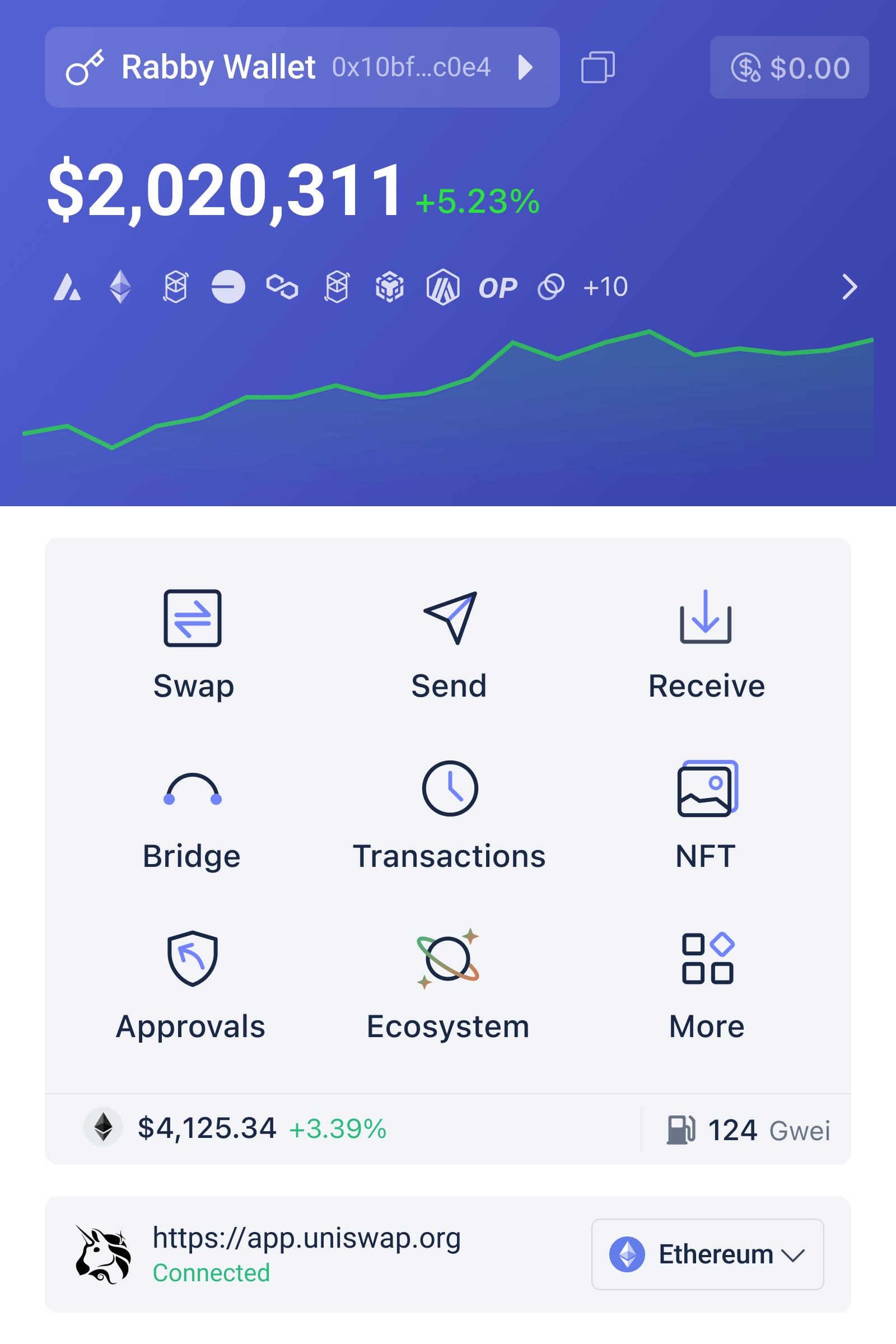
Once installed, the practical advantage of a transaction-aware wallet is not that it removes risk. Its value is that it can place more context beside the signature: expected balance changes, contract interactions, approval details, and warnings when a request appears inconsistent with the visible action. That context helps users compare the transaction they intended with the transaction the application actually constructed. The final authorization remains the user’s responsibility.
A reusable decision framework is simple. First, identify the action: swap, deposit, borrow, mint, bridge, or approval. Second, separate the immediate asset movement from the lasting permission. Third, ask whether the spender is the contract you expected and whether the amount is proportionate. Fourth, use simulation as a consistency check. Finally, decide whether the remaining exposure justifies the convenience. If the answer is unclear, stop and investigate rather than treating an unfamiliar warning as routine interface noise.
What to watch next
The next phase of wallet safety will likely depend on better interpretation rather than more warnings alone. If simulations become more accurate across complex contract calls, users may receive clearer explanations of intent. But improved presentation could also create overconfidence. A green result may mean only that the transaction executed as modeled. The important signal to watch is whether wallets can explain authority over time: which contracts can spend which assets, on which chains, under what limits, and for how long. That longitudinal view would connect transaction simulation with approval management instead of presenting them as unrelated alerts.
For now, the strongest approach is layered. Use simulation to inspect the immediate transaction, use limited approvals when the context is uncertain, and review old allowances as part of wallet hygiene. No single feature can compensate for a compromised website, a leaked recovery phrase, or a user who signs without reading. But combining these practices changes the question from “Does this transaction look normal?” to the more useful question: “What can this action do now, and what authority will it leave behind?”
Frequently asked questions
Does transaction simulation guarantee that a DeFi transaction is safe?
No. It provides an estimate of the transaction’s likely result under a particular blockchain state. Network changes, contract complexity, timing, hidden economic risks, and malicious interfaces can still matter. Treat simulation as a verification layer, not an audit or insurance policy.
Why should I care about token approvals after a swap or deposit?
An approval can remain active after the visible transaction finishes. It may allow a designated spender to transfer the approved token later, subject to the token and contract’s behavior. Reviewing or reducing unused allowances limits the authority that remains in the background.
Are limited approvals always better than unlimited approvals?
They are generally narrower, but they can require more transactions and fees. Limited approvals are most useful when the application is new, the wallet holds significant value, or the interaction is one-time. For repeated use of a well-understood protocol, some users may accept broader permissions while keeping funds compartmentalized.